


Bullion Bank, Danantara: Indonesia’s Financial Revolution in 2025?
March 23, 2025
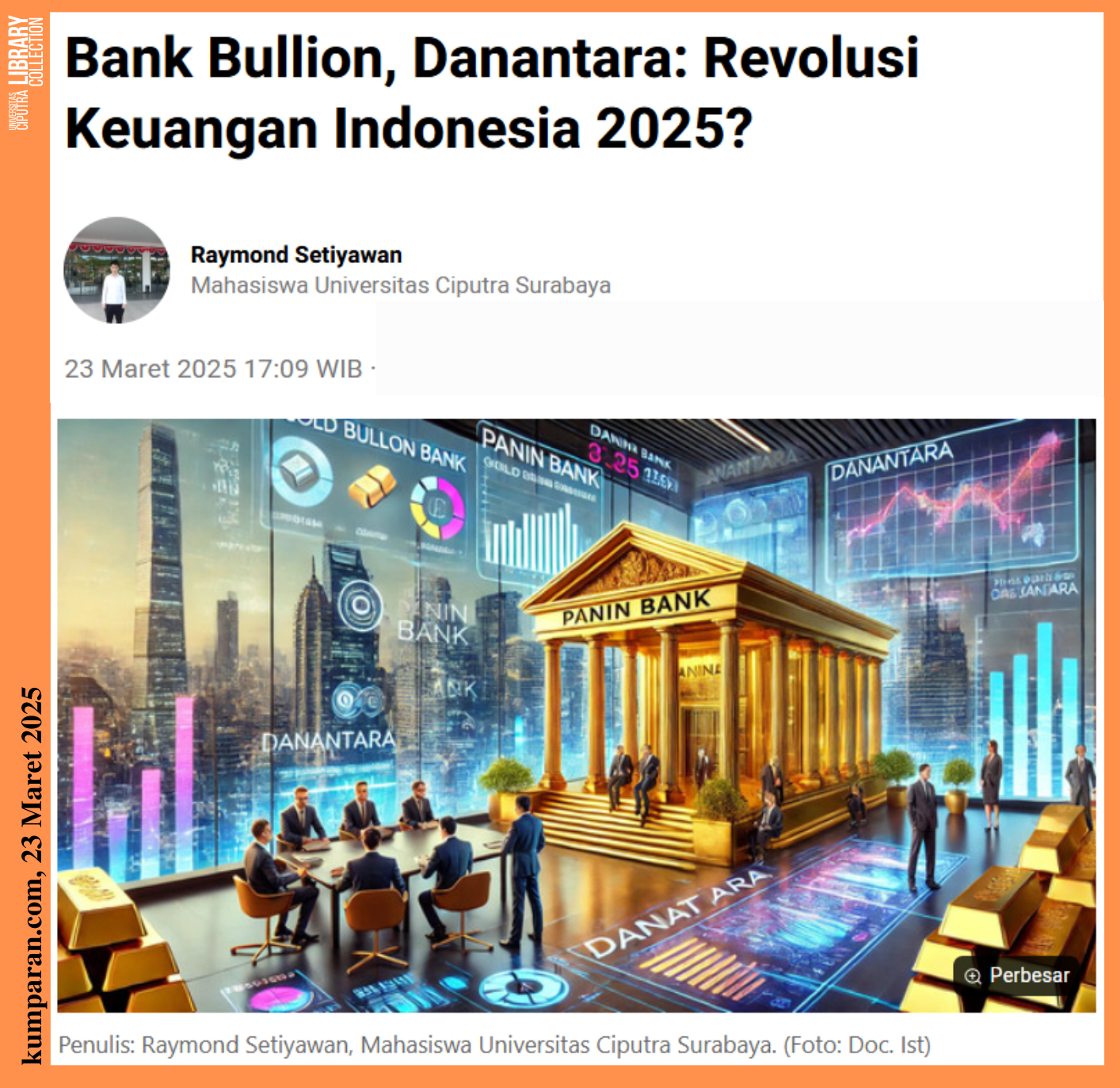
Indonesia is increasingly becoming a focus for international financial companies looking to expand their operations. In early 2025, one strategic move that attracted attention was the launch of Indonesia’s first bullion bank. President Prabowo Subianto inaugurated this bank to maintain domestic gold reserves, given that Indonesia is one of the world’s largest gold producers. Banks such as Pegadaian and Bank Syariah Indonesia are now licensed to offer gold deposit, trading, and custodial services, which could strengthen the national financial system.
Meanwhile, Indonesia is also considering the establishment of a sovereign wealth fund, “Danantara,” which would be directly controlled by President Prabowo. This fund aims to oversee government ownership in various state-owned enterprises and finance strategic projects. While it has the potential to improve the efficiency of state asset management, this plan raises concerns regarding potential political interference and transparency in its management. Such a strategy will significantly determine the direction of financial investment in Indonesia in the coming years.
In the Islamic finance sector, Indonesia continues to show rapid growth, attracting foreign investment. International Islamic banks are beginning to explore collaboration opportunities with local financial institutions to expand their service offerings. With the world’s largest Muslim population, Indonesia is a key market for Islamic banking, offering financial products based on Islamic principles. This potential is further strengthened by government policies encouraging the development of the Islamic economy through regulations and fiscal incentives.
Foreign investment in the financial technology (fintech) sector is also expected to surge by 2025. Global fintech companies see Indonesia as an attractive market, driven by the increasing adoption of digital technology in financial services. Collaborations between traditional banks and fintech startups are accelerating innovation in digital payments, online lending, and technology-based insurance. With more innovation-friendly regulatory support, Indonesia’s fintech ecosystem is predicted to continue its rapid growth.
Overall, the strategies of international financial companies in Indonesia are increasingly diverse and dynamic. From investments in the banking sector, fintech, to Islamic banking, Indonesia offers significant opportunities for global investors. However, challenges such as regulation, economic stability, and policy transparency remain factors that require attention. With the right approach, international companies can capitalise on Indonesia’s economic growth momentum to strengthen their position in this increasingly competitive market.