


Promoting Innovation and Technology, PT SPIL and Ciputra University Inaugurate Research Centre
February 28, 2025
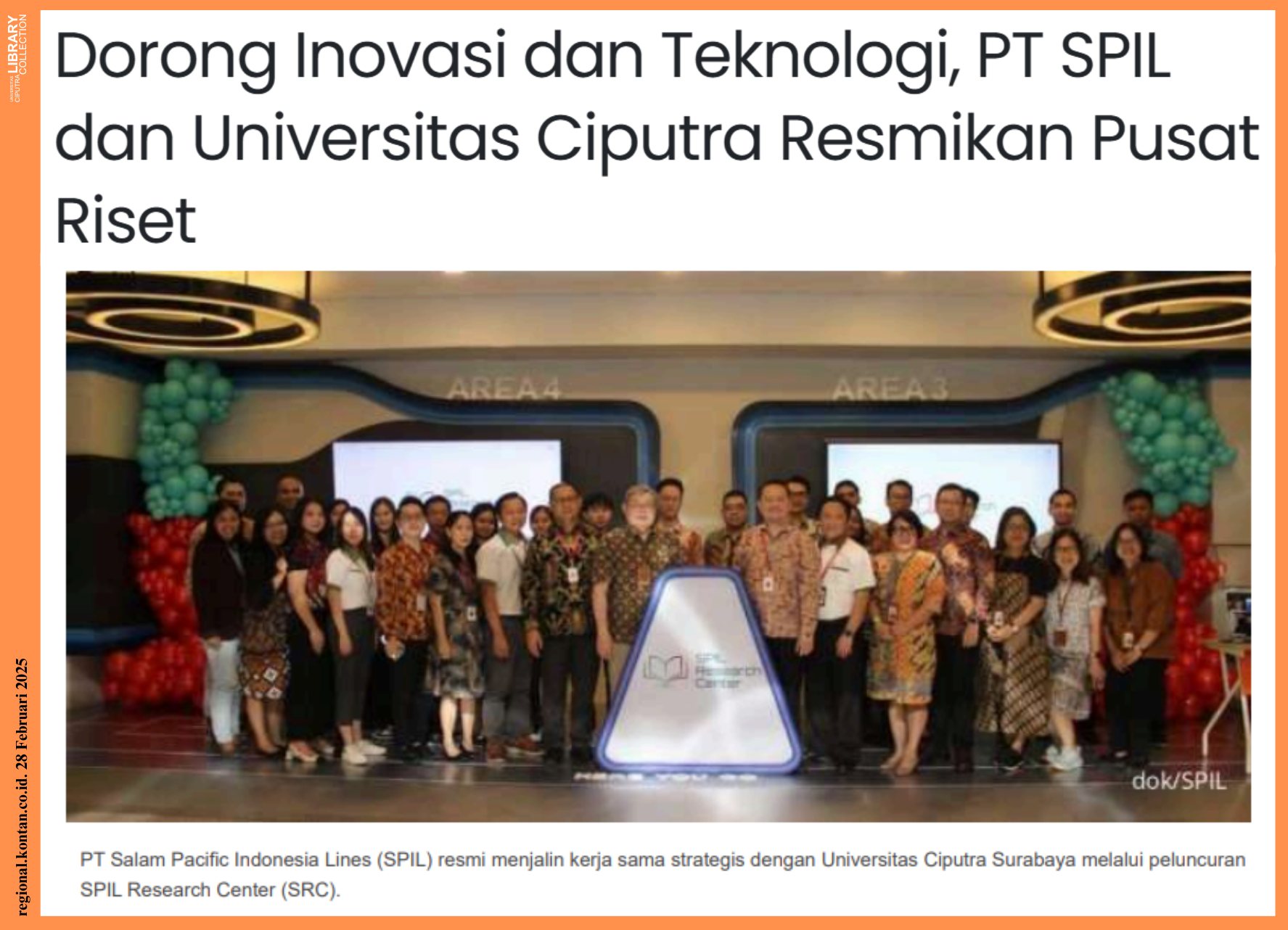
RESEARCH – JAKARTA. PT Salam Pacific Indonesia Lines (SPIL) has officially established a strategic partnership with Ciputra University Surabaya through the launch of the SPIL Research Centre (SRC).
This collaboration aims to transform academic research findings into real solutions for industry and economic development.
PT SPIL’s Director of Human Capital & Corporate Affairs, Ang Harry Tjahjono, emphasised the importance of bridging the gap between academia and industry. He noted that much research ends up in academic journals without any real implementation.
“Through the SRC, we are committed to applying the research findings of students and lecturers to real business needs,” he said in a press release on Friday (February 27, 2025).
PT SPIL, he continued, focuses on developing Artificial Intelligence (AI) technology and improving its operations management system to increase company efficiency.
“The efficiency we’re referring to isn’t a reduction in the workforce, but rather an increase in human resource capacity and the expansion of job opportunities. This is what we hope to achieve from this collaboration,” he added.
The Rector of Ciputra University Surabaya, Yohannes Somawiharja, welcomed this collaboration as a concrete step in producing graduates who not only understand theory but are also able to provide solutions for industry.
“We want to ensure that academic research has a practical impact on the business world. Through this partnership, students will have the opportunity to understand the challenges of the logistics and shipping industry firsthand,” said Yohannes.
As a first step, the Ciputra University team will conduct an assessment at PT SPIL to identify research areas that can be developed together. This collaboration is expected to generate innovations that benefit the industry and the wider community.
The establishment of the SPIL Research Centre is also in line with the government’s efforts to encourage triple helix collaboration between academia, industry, and government to accelerate innovation and national economic growth.
This collaborative model is expected to be replicated by other educational institutions and companies in Indonesia.