Jokowi – as Widodo is also known – showed no signs of disapproving of his son’s relationship with Felicia. Since taking office in 2014, he has stressed national unity in one of the world’s most ethnically and culturally diverse countries that is home to 270 million people.
“Personally, I was heartbroken by the news because I had hoped that as a couple, Kaesang and Felicia could become a symbol for pluralism – that love finally wins,” said Vivid Sambas, a 46-year-old life coach who wrote an essay on interracial and interfaith relationships titled “Love That Tears Down Barriers” in the anthology Narasi Memori Tionghoa (Narrated Memories of Chinese-Indonesians).
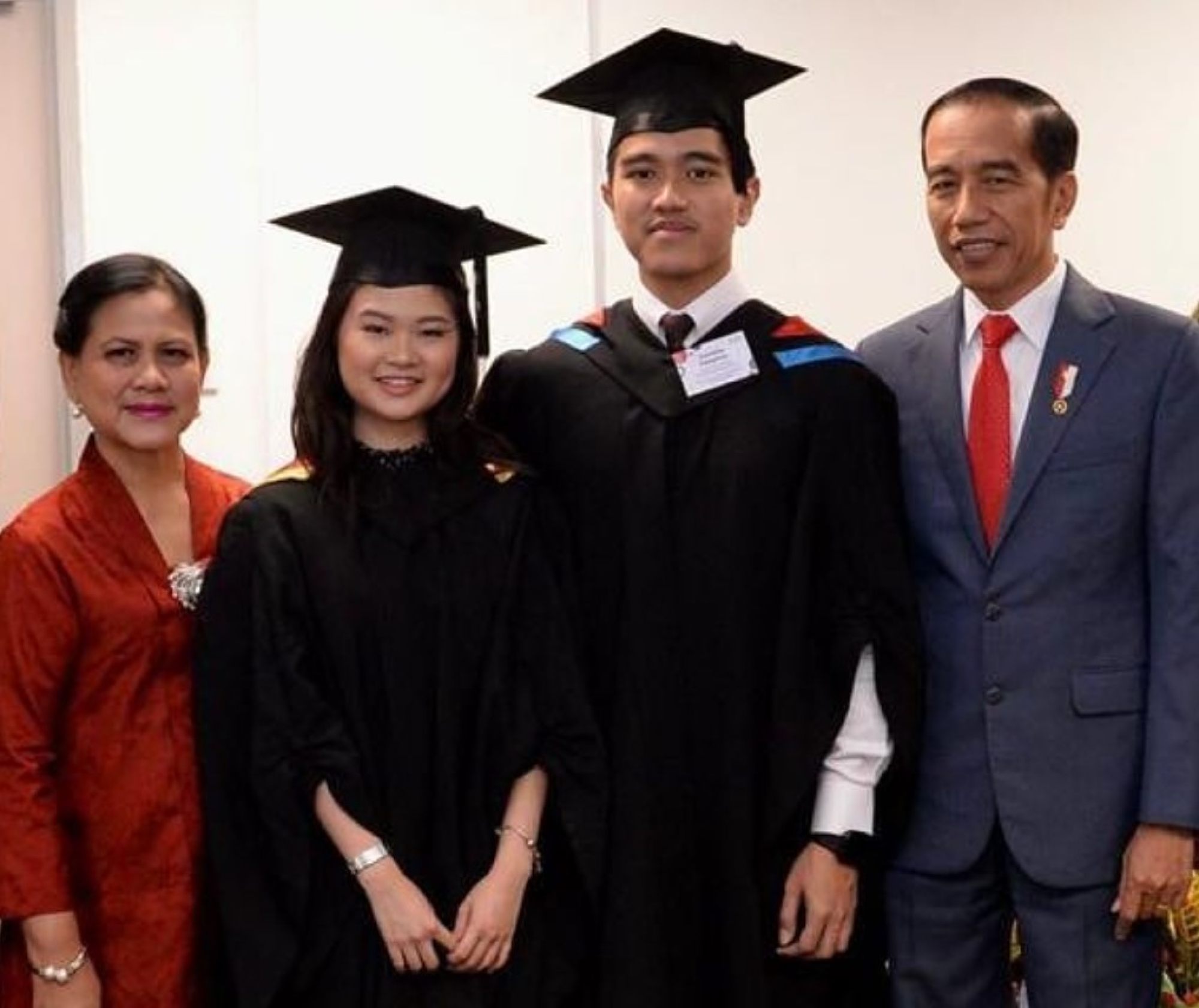
Felicia and Kaesang pose with his parents, Jokowi and Iriana, in a photo posted on Felicia’s mother’s Instagram account.
Ratya Mardika Tata Koesoema, chairman of Ganaspati, an Indonesian organisation that promotes patriotism and pluralism, agreed that the interracial nature of the relationship was its main appeal.
“It’s rare in Indonesia for a Muslim Javanese man to be romantically involved with a non-Muslim Chinese woman. But here we had such a couple whose photos were widely shared on social media, especially during the [2014] presidential campaign [when Jokowi first ran as a candidate],” the 40-year-old said. “The couple became our [national] icon for diversity and hope for minority groups.”
Chinese-Indonesians have always been taught to be mindful of their place in societyGrace Suryani Halim, Chinese-Indonesian novelist
Statistics are scant on both interracial and interfaith marriages in Indonesia. Data collected in the 2000 census revealed that only around 1 per cent of Indonesian Muslims married outside their faith. While interfaith marriages are technically legal, in practice the state registry office will not recognise unions that have not been sanctioned in a religious ceremony – and most clergy refuse to marry couples of different faiths unless the non-believer converts.
As far as public scandals involving presidential offspring go, Kaesang’s break-up with Felicia is far from the most melodramatic. In 2006, for example, Bambang Trihatmodjo, the third son of the late President Suharto, was attacked by his wife and son, along with several bodyguards, in the home he shared with his lover, the singer Mayangsari. Trihatmodjo’s son ended up punching his father for “betraying his mother”.
That episode unfolded before the dawn of social media, however, and did not play out in public to the same extent. It was, after all, Felicia’s own mother who broke the news of her daughter’s break-up on Instagram – not only airing her grievances against Kaesang in public but tagging his father Jokowi in the process.
Lau seemingly spared no detail and was none too deferential towards the president in her language, displaying a defiant attitude that came as a shock to many Indonesians who dislike direct confrontation and treat authority figures with deference. Social media users accused her of being “crass” and “acting irrationally because her hopes of her family becoming in-laws with the president had been dashed”.
But Grace Suryani Halim, a 37-year-old Chinese-Indonesian novelist who grew up in Jakarta and now lives in Singapore, had a different take on the matter.
“Chinese-Indonesians have always been taught to be mindful of their place in society and to accept their lot [in life]. This is why silence is golden for many of us,” she said. “But Felicia’s family is from Singapore [on her father’s side]. Here the ethnic Chinese are the majority and suffer from no siege mentality. Perhaps this is why Indonesians were surprised to see a Chinese behaving in a manner more assertive than what they are used to.”
Halim said she believes that differences in cultural traditions and perspectives may have been at the root of Kaesang and Felicia’s messy break-up.
“Chinese people are concerned about mian zi (face) and if it’s true that Kaesang ghosted Felicia and did not end their relationship properly, then he did not give ‘face’ to her family. If it’s true that he had promised to marry her before the family altar, then his broken promise was an even graver matter [from an ethnic Chinese perspective].”
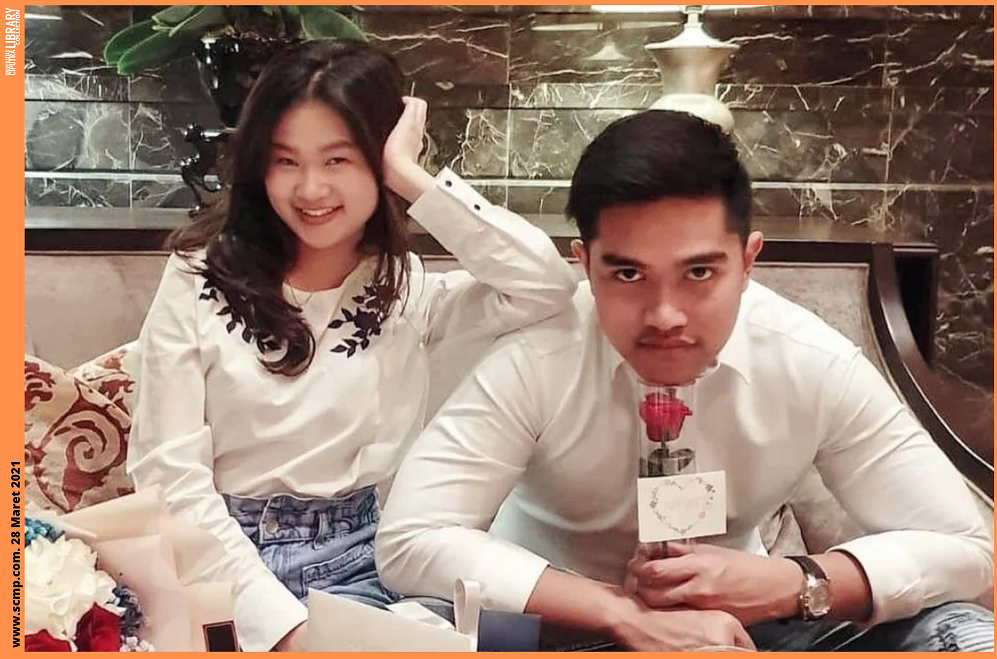
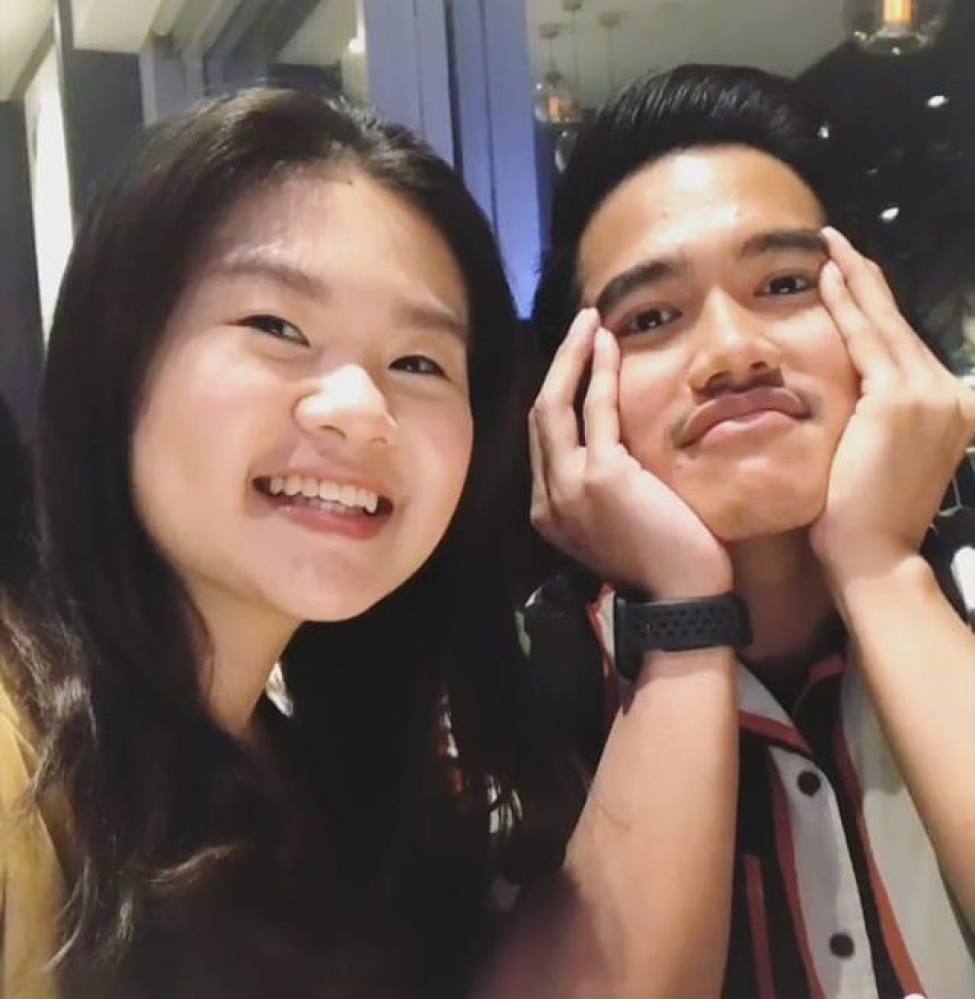
Felicia Chew and Kaesang Pangarep pictured in happier times. Photo: Instagram
Freddy Istanto, an academic at the University of Ciputra Surabaya and chairman of the Surabaya Heritage Society, echoed this sentiment – pointing to a Javanese tradition of displaying intricately woven coconut leaves, or janur, outside the homes of couples who are soon to marry.
“The Javanese have a saying that ‘as long as janur is nowhere to be seen, then nothing is final’. Perhaps this is what Kaesang genuinely believed. The problem is that as far as Chinese people are concerned, the bond that is made before our parents shouldn’t be taken lightly,” he said.
Speculation has been rife that the break-up had a political dimension, with critics pointing to how it would look for Jokowi to have an ethnic Chinese, non-Muslim daughter-in-law – particularly now that his eldest son, Ghibran Rakabuming, and son-in-law Bobby Nasution, have decided to enter politics as well. Rakabuming was recently elected as the mayor of Solo. He married his wife Selvi Ananda Putri in 2015 – she is Javanese by ethnicity and had been raised as a Christian but converted to Islam before her marriage.
The president’s piety has long been called into question by his political enemies, especially hard-line Muslims, and he has gone to great pains to avoid being portrayed as anti-Islam in the past, even going so far as to claim in a 2018 speech that no one should doubt he was “pro-Islam”. The fall from grace of his erstwhile ally Basuki Tjahja Purnama, meanwhile – the Chinese-Indonesian former governor of Jakarta known as Ahok who was
found guilty of blasphemy in 2017– serves a potent reminder of anti-Chinese sentiment in Indonesian politics.
Islamic tradition usually dictates that a Muslim man can marry a Jewish or Christian woman as they are “People of the Book”, but the Indonesian Ulema Council, the country’s highest Islamic body, ruled in 1980 that such unions were forbidden.
Felicia’s eldest brother, Daryl Chew, has implied that his sister was used as a pawn, saying in a video message that “there are responsibilities and consequences when a family of status or any family for that matter decides to bring someone else’s daughter into their lives and spring her into the spotlight”. “Do not think that you can … sacrifice someone else’s life and happiness for your own interests,” he said.
Though some have questioned the timing of the break-up – seeing it as an extension of Jokowi’s apparent move away from pluralism in the face of intensifying criticism from his Islamist rivals – few have seriously suggested that the president had a hand in it. Vivid Sambas, the life coach and author, noted that even Daryl Chew “confirmed [in his video message] that Kaesang had told Felicia that his father had agreed to their marriage”. “So it seemed to be Kaesang’s own decision [to end the relationship and not his father’s],” he said.
Yet the saga highlights some uncomfortable truths about interracial and interfaith intolerance in Indonesia, and hints at a deficit of cultural understanding in a country where ethnic Chinese make up less than 2 per cent of the population.
“Both sides need to get to know each other on a level that is beyond the superficial pleasantries,” Freddy Istanto said. “Both need to be curious of each other’s customs and culture. This is something which cannot be forced or engineered. It must happen naturally.”