


The Secret of Oey Soe Tjoen’s Batik Revealed in the Book ‘From the Rainbow to the Universe’
March 1, 2025
Surabaya, mili.id – Ciputra University’s Centre for Creative Heritage Studies (CCHS) held the 2025 Peranakan Festival.
The Peranakan Festival, themed “Peranakan: Past, Present, and Future,” was held on the 7th floor of the UC Main Building on Saturday (March 1, 2025).
The festival featured significant cultural events, bringing together academics, artists, and culture enthusiasts to celebrate the rich heritage of Javanese-Chinese Peranakan culture.
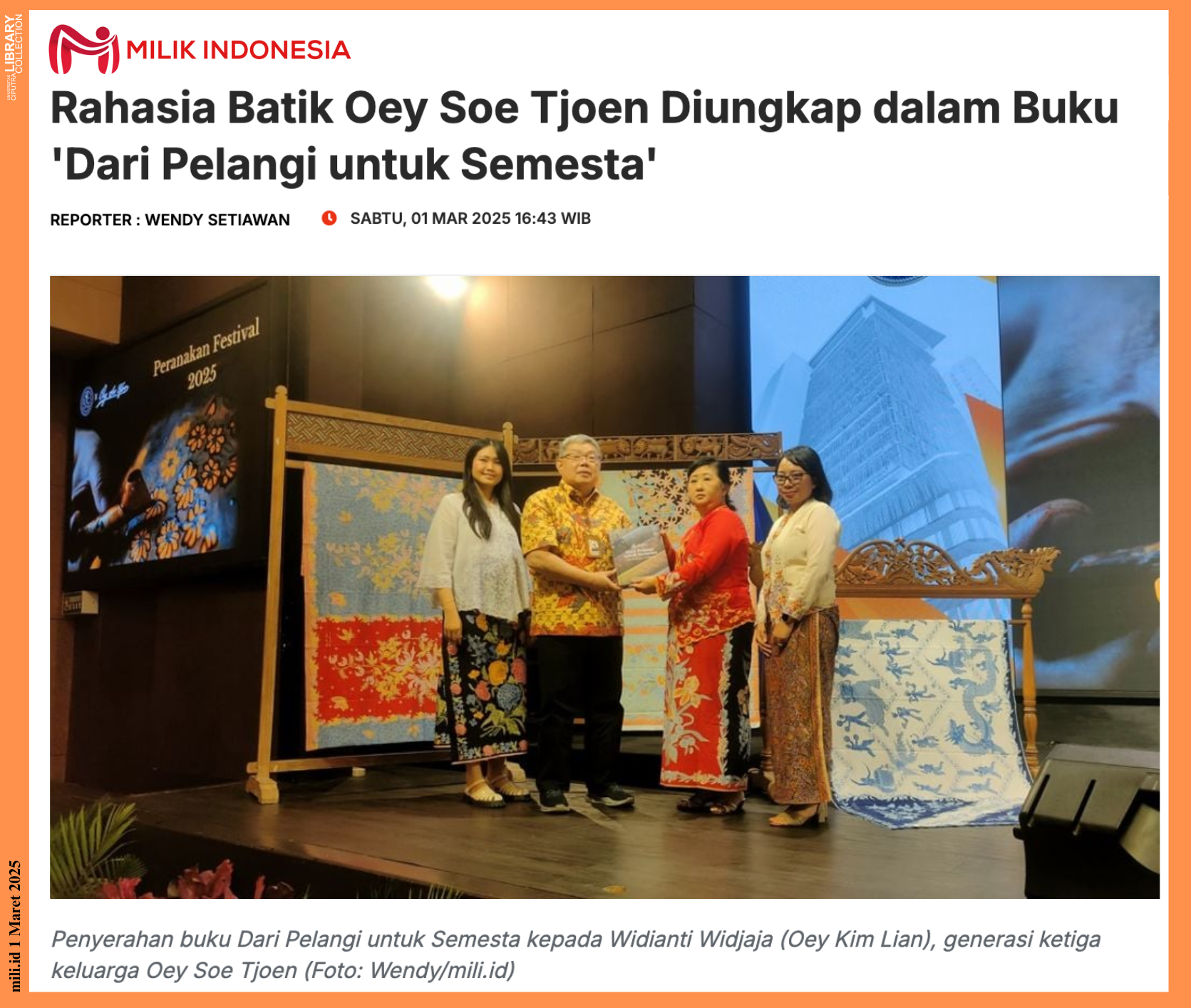
Interestingly, UC also partnered with Rumah Batik Oey Soe Tjoen to launch the book “From the Rainbow to the Universe” in celebration of the 100th anniversary of Oey Soe Tjoen batik.
UC Rector, Ir. Yohannes Somawiharja believes that Oey Soe Tjoen’s batik is the best in Indonesia, a Javanese-Chinese cultural collaboration that must be preserved.
“This is a work of the Indonesian people, and we want to contribute to preserving batik. The family wants to document the batik-making process so that it can benefit many people who want to create batik like this,” he said.
The book explores the secrets of the Oey Soe Tjoen batik house’s production process, from selecting the fabric, selecting the canting (stamping tool), to creating the patterns, and finally, the colour selection.
Through this book, he hopes to invite students to learn about the tastes of batik directly from the Oey Soe Tjoen family, a highly sought-after batik collector in Asia.
“We want to tell them what batik is like in a classic way, so that this cultural heritage will last,” he said.
On the same occasion, Widianti Widjaja (Oey Kim Lian), the third generation of the Oey Soe Tjoen family, expressed her joy at being able to document the batik-making process in detail with the help of a publication from UC.
“I couldn’t do it myself, because compiling a book requires patience, and it requires explaining it so people understand,” he said.
He hopes this book will foster the growth of new batik artisans and help them appreciate their Indonesian cultural heritage.
“The purpose of publishing this book is to archive the heritage of the Oey Soe Tjoen batik house so it can inspire future generations,” he explained.
The reason for agreeing to write this book was that Widianti felt that her son, who should be the fourth-generation successor, lacked the interest to continue the family business.
“I would have allowed my son if he could make batik exactly like mine. But he immediately said he couldn’t,” she added.
It’s worth noting that Oey Soe Tjoen’s batik is not for sale. The house only produces to order, and the production process itself takes a long time.
Theoretically, a single piece of batik can be completed within three years. However, several factors contribute to the lengthy process, including weather and the need for skilled workers to match Widianti’s workmanship.
Even when the batik is finished and the customer or collector is satisfied, Widianti deems it lacking, and she doesn’t hesitate to redo it to ensure authenticity.
Widianti then burns the batik she deems deficient. This is done to prevent anyone from exploiting the waste.
Editor: Narendra Bakrie