


UC Surabaya Students Transform Music into Visual Art, Highlighting the Emotions and Mental Health of Generation Z
12 June, 2026
Surabaya, VIVA Jatim—Amid Generation Z’s growing awareness of mental health and the importance of self-expression, students in the Visual Communication Design (VCD) program at Ciputra University (UC) in Surabaya have presented a unique way to interpret human emotions through visual art.
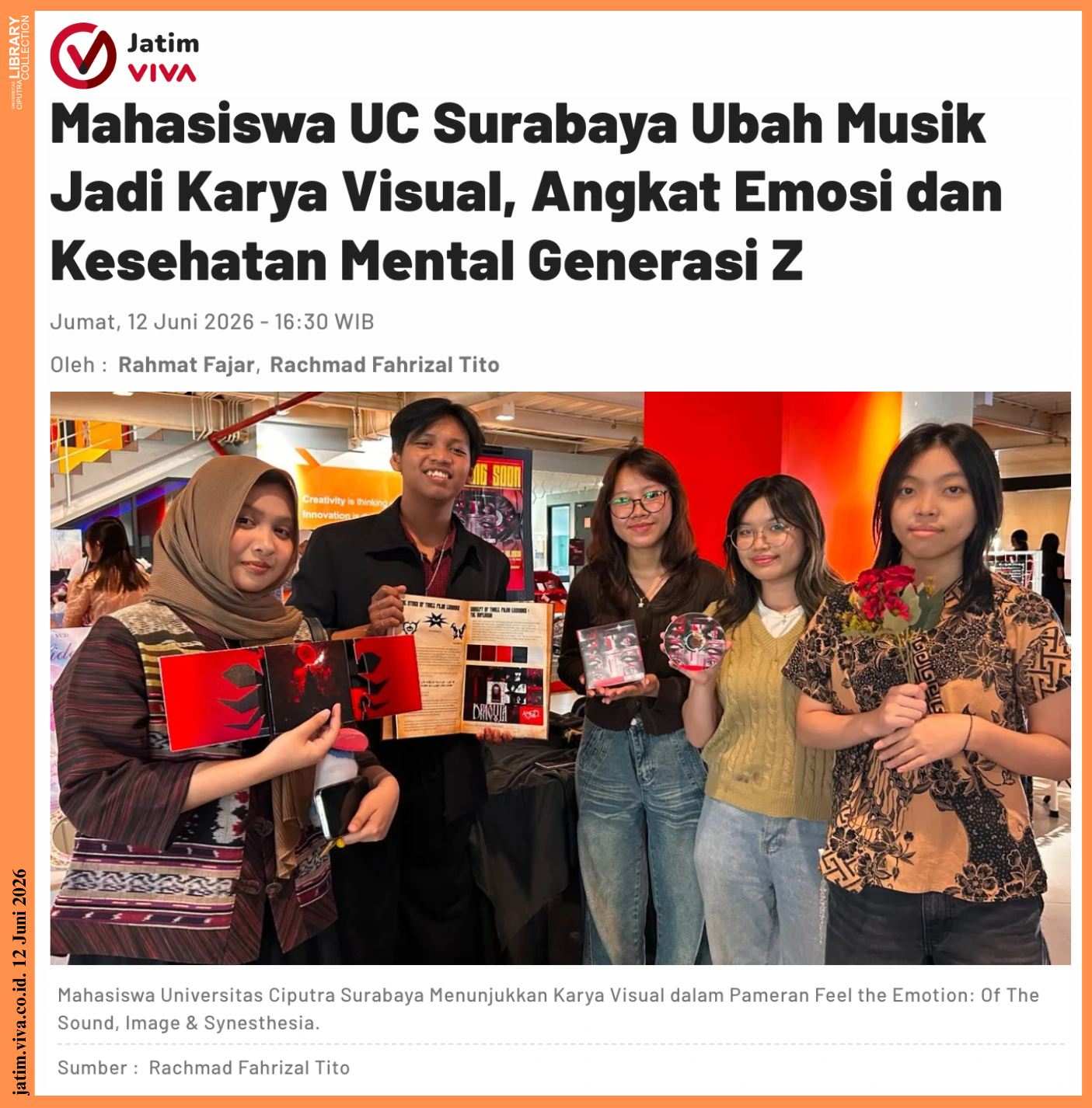
Through an exhibition titled “Feel the Emotion: Of the Sound, Image, & Synesthesia,” second-semester VCD students invite the public not only to listen to music but also to see and feel the emotions contained within it through various creative visual works.
The exhibition, held at Ciputra University’s Copreneur, features dozens of student works inspired by four original songs they composed themselves. The students not only created the music and lyrics but also translated the songs’ meanings into various visual mediums, such as album covers, posters, photography, illustrations, and interconnected visual identities.
Pandu R. Utomo, a Visual Communication Design lecturer at Ciputra University, explained that this project was designed to broaden students’ understanding of design as a medium of communication capable of reaching beyond mere visual aspects.
“Good design is not just enjoyed by the eyes. Design can engage the other senses, interact with sound, touch, and taste, create impressions, stimulate the mind, and evoke emotions. Through this project, students learn how an experience can be translated into meaningful visual communication,” he said on Friday, June 12, 2026.
According to Pandu, this approach is becoming increasingly relevant amid the development of the global creative industry, which is moving toward more immersive and multisensory experiences. Today’s designers are not only required to produce aesthetically pleasing work but also to build strong emotional connections with their audience.
This is reflected in the students’ works, many of which explore themes closely tied to the lives of Generation Z—ranging from the search for identity, family and friendship relationships, loss, and hope, to reflections on everyday life experiences.
The exhibition chair, Benaya Christofer F., said the concept was inspired by the phenomenon of synesthesia—a condition in which a person experiences cross-sensory connections, such as seeing colors when hearing certain sounds.
“Usually, music is just heard. In this exhibition, we’re trying to translate music into a visual experience that can be seen and felt. Each piece has a different story, atmosphere, and emotion based on the creator’s experience,” said Benaya.
He explained that all the works on display emerged from a lengthy creative process. The students first composed a song as the primary foundation before developing a visual concept that aligns with the message they wanted to convey.
Through this exhibition, students are encouraged to understand that visual communication design not only serves to convey information but can also function as a medium for self-reflection and the expression of deeper emotions.
Pandu hopes the exhibition will serve as a platform to showcase students’ work while highlighting the increasingly human-centered direction of visual communication design.
“Design work is no longer merely about conveying information; it has become a medium for creating experiences, sparking reflection, and fostering deeper emotional connections,” he concluded.