

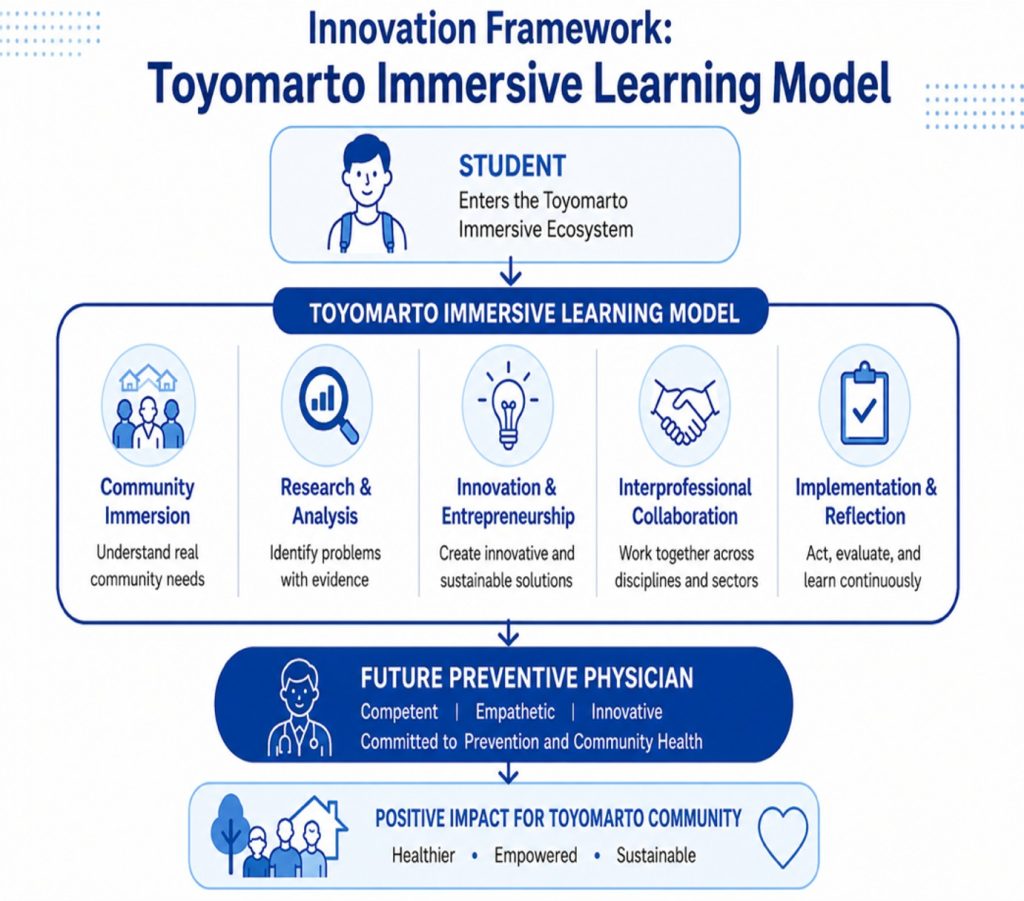
Toyomarto Immersive Learning Model: Educating Future Preventive Physicians

Toyomarto Immersive Learning Model: Educating Future Preventive Physicians
Project Summary
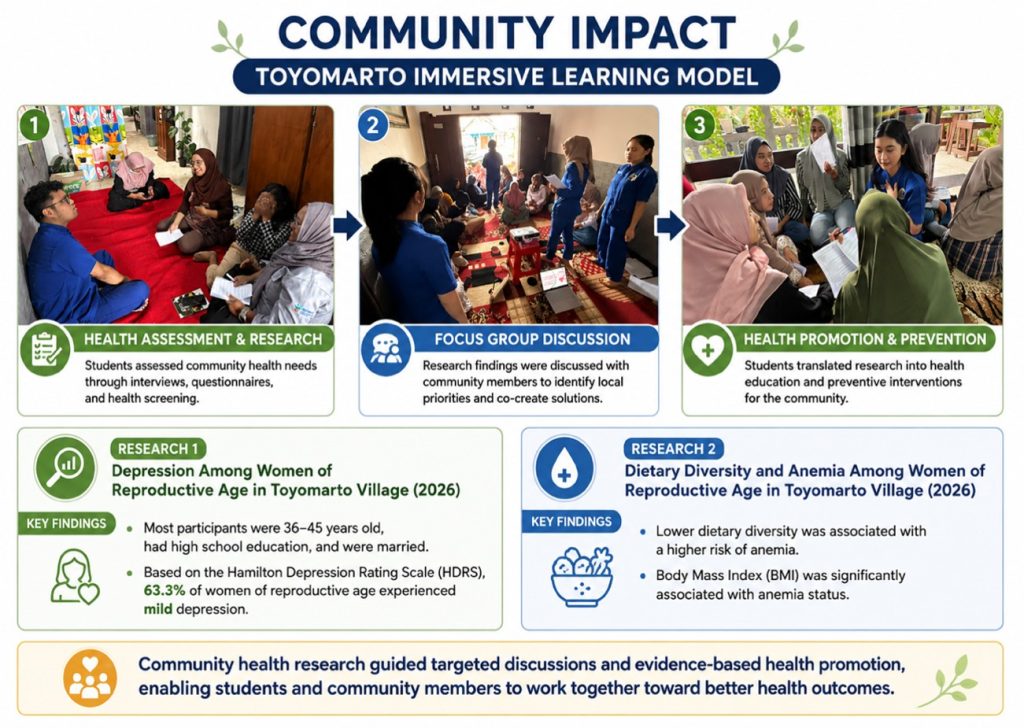
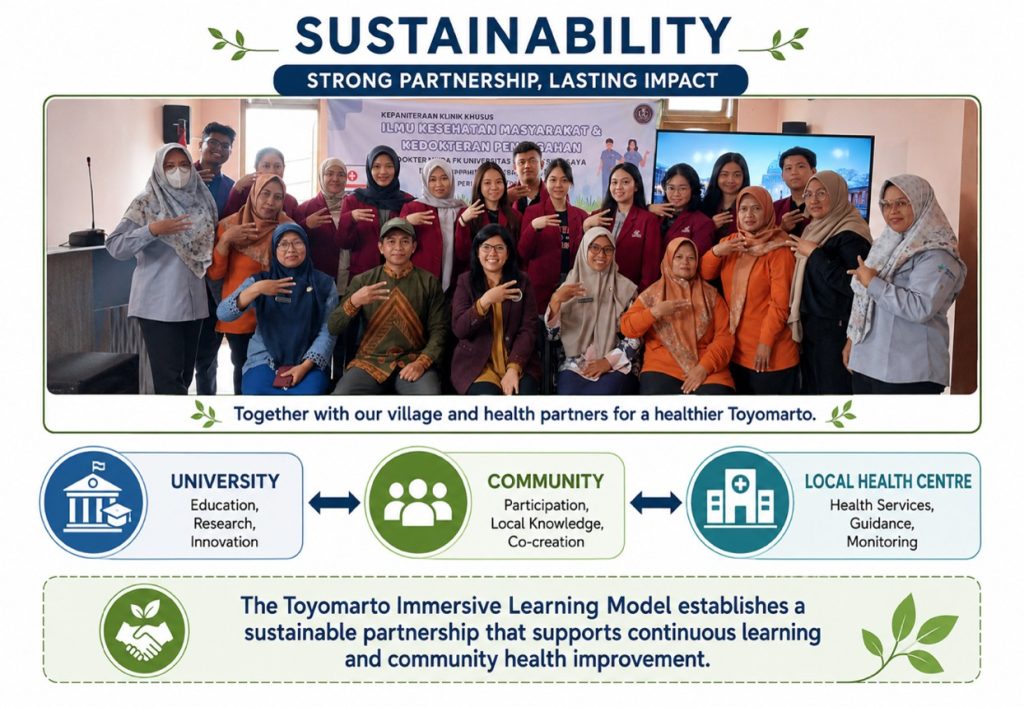
The Toyomarto Immersive Learning Model (TILM) transforms medical education by moving learning beyond the classroom into Toyomarto Village, East Java, Indonesia, where students learn with communities through authentic experiences. Working alongside community members, healthcare professionals, and local partners, students identify health priorities, conduct research, develop and implement sustainable interventions, and evaluate their impact. This continuous integration of education, research, innovation, and community partnership develops clinical competence, leadership, teamwork, empathy, and problem-solving skills while improving community health and preparing future physicians to create lasting impact through preventive medicine.
Vision:
To educate future physicians who create lasting health impact through learning with communities.
Mission:
To create immersive learning experiences that bring students, faculty, and communities together to identify health priorities, conduct research, develop innovative solutions, and improve community health
The core educational challenge or unmet need this initiative addresses.
Traditional medical education often relies on classroom teaching and short community or clinical placements. As a result, students have limited opportunities to understand real community health needs or develop practical solutions with the people they serve. The Toyomarto Immersive Learning Model addresses this gap by providing long-term community immersion where students work with local partners to identify health priorities, conduct research, co-create solutions, and implement sustainable interventions. This prepares future physicians to prevent disease and improve community health through real-world experience.
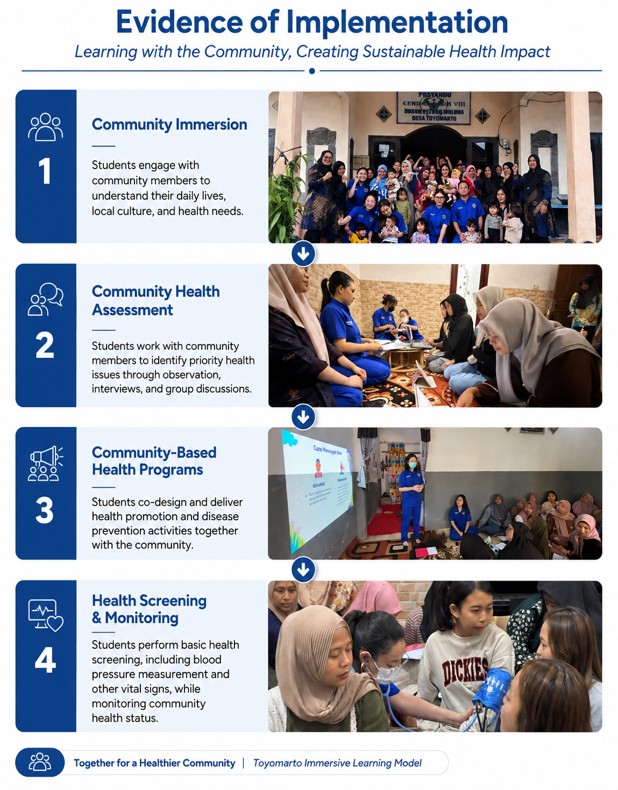
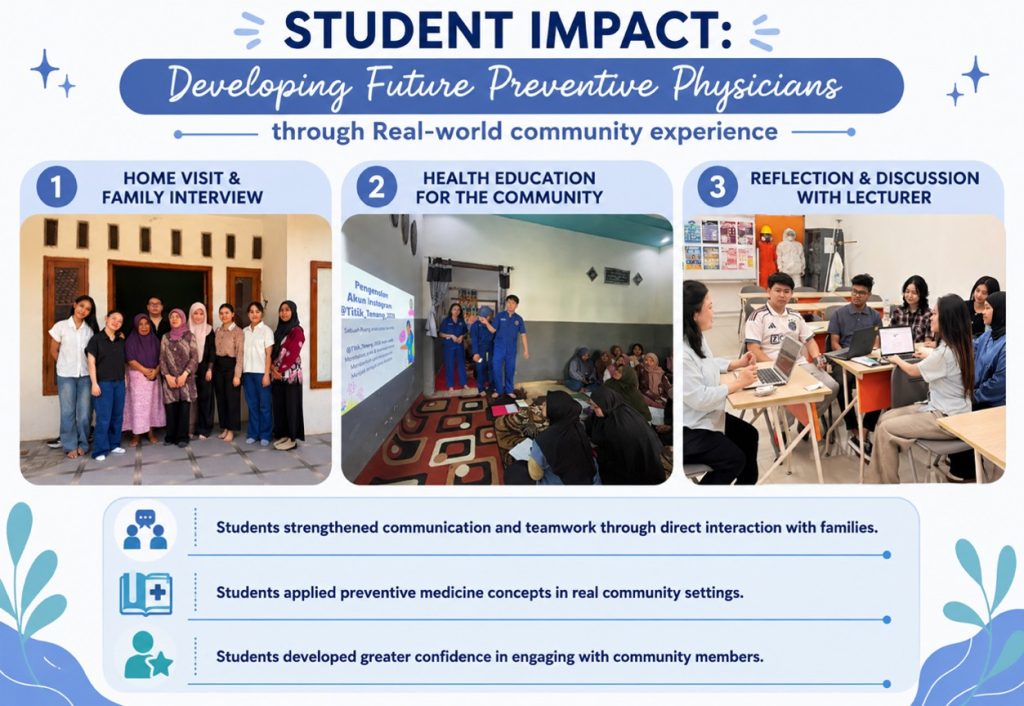
The Toyomarto Immersive Learning Model (TILM) helps students develop competencies that extend beyond clinical knowledge. Through sustained community immersion, students strengthen critical thinking, communication, leadership, teamwork, research, and problem-solving while applying preventive medicine in real-world settings. These authentic learning experiences build confidence, adaptability, and the ability to work effectively with communities and multidisciplinary teams, preparing graduates to become future preventive physicians and socially accountable healthcare leaders.
For the institution, TILM strengthens community partnerships, advances socially accountable medical education, and creates opportunities for collaborative research and innovation. Student learning is assessed through reflective portfolios, faculty and community feedback, project presentations, and project outcomes. Community impact is monitored through participation in health programs, basic health indicators, and evidence of improvements resulting from student-led interventions.
Over the next 12–24 months, we will strengthen the Toyomarto Immersive Learning Model by improving the learning activities, building stronger partnerships with local health centres and the community, and embedding the program into the undergraduate medical curriculum. We will also continue to evaluate its impact on student learning and community health.
Over the next 3–5 years, we plan to introduce the model to other communities with different health needs and share what we have learned through research, faculty development, and academic collaboration. This growth will be supported by strong partnerships, regular evaluation, and practical guidance that will help other medical schools adopt and adapt the model.